


Players often confront the spinning wheel with a blend of excitement and uncertainty, particularly when they stare down the double-zero layout of American roulette. The game stands apart in the casino world as its house edge is significantly different from the other popular variants. Understanding why that edge exists and how it affects every wager is the first step toward playing with real awareness. At TuffPuff Casino, we maintain that informed play converts a simple game of chance into a more absorbing, measured experience. This article dissects the structural realities of American roulette, explores the strategies players commonly try, and details what those strategies can and cannot do. We’ll walk through the mathematics, the betting systems, bankroll considerations, and the practical ways to tackle the wheel without falling for common misconceptions. No strategy can remove the house advantage, but a clear hold on the mechanics lets us make decisions that align with our own risk tolerance and our personal entertainment goals.
The key distinction that sets apart American Roulette
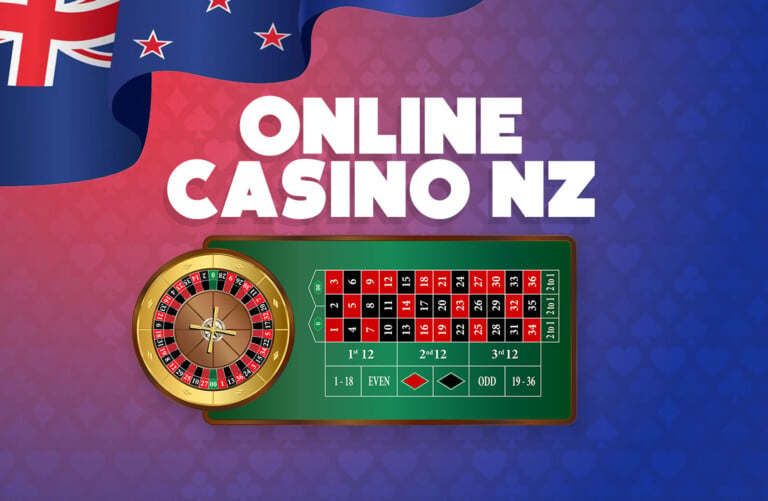
American roulette separates itself from European and French variants with one decisive feature: the wheel carries both a single zero and a double zero. That raises the total pocket count to 38, as opposed to 37 in European roulette. The extra pocket doesn’t change the payout for a straight-up win, which stays at 35 to 1, but it does shift the probability of hitting any single-number bet from 1 in 37 to 1 in 38. That small change pushes the house edge from 2.70 percent to 5.26 percent on most bets. We ought to pause on that figure because it’s the foundation any American roulette strategy has to deal with. For every unit we bet on a standard inside or outside bet, the theoretical long-term retention by the house is 5.26 percent. The only exception is the five-number bet covering 0, 00, 1, 2, and 3, which possesses a steeper edge of 7.89 percent. These percentages are not an academic exercise; they directly tell us which bets we may wish to skip and why even the most disciplined system cannot overcome the built-in mathematical disadvantage over extended play.
The wheel layout itself varies from the European single-zero arrangement. On an American wheel, the zeros are positioned opposite each other, and the number sequence running clockwise from the double zero follows a pattern designed to balance high and low, odd and even, red and black as evenly as possible. Still, no arrangement can eliminate the statistical weight of that extra green pocket. When we put an even-money bet like red or black, we are not facing a 50 percent chance of winning. Two green pockets indicate the probability of catching red on any given spin is 18 in 38, or roughly 47.37 percent. The same applies to black, odd, even, low, and high. The payout remains at 1 to 1, so the gap between the true odds and the payout odds generates the house edge. Spotting that gap is essential because it makes clear why strategies that depend on even-money progressions don’t touch the underlying arithmetic. They just adjust the timing and size of wins and losses inside a framework that still favors toward the house. At TuffPuff Casino, we encourage players to absorb these numbers before they lay their first chip. Clarity at the start prevents confusion away later.
The Five-Number Bet and Why We Avoid It
We referenced the five-number bet earlier, tuffpuffcasino platform, and it merits its own attention because it is unique as the poorest wager on the American roulette layout. This bet includes 0, 00, 1, 2, and 3, and it returns 6 to 1. The probability of winning is 5 in 38, which equates to a house edge of 7.89 percent. That figure is a lot larger than the 5.26 percent stuck to every other bet on the table, except the basket bet on some layouts that may cluster 0, 00, and 2 with a different payout structure. We point this out because many new players don’t immediately spot the gap. The bet rests on the layout in a way that appears convenient, connecting the zeros to the first row of numbers. But the payout doesn’t align with the true odds. Over the long run, a player who repeatedly makes the five-number bet will drop nearly eight units for every hundred wagered, relative to just over five units on other bets. The difference is substantial enough that we view avoiding this bet a essential piece of any reasonable American roulette strategy.
Some players ask if the five-number bet can play a part in combination strategies that also span other wheel sections. The mathematical answer is that incorporating it always raises the blended house edge of the total wager. Even if we’re utilizing a system that places chips across many numbers, swapping in a different set of inside bets to target the same numbers will yield a lower expected loss. For example, we could put a split on 0 and 00, a street on 1 through 3, and a split on 1 and 2, obtaining similar coverage with a blended edge closer to 5.26 percent. The effort to make a few bets instead of one is minimal, and the long-term benefit is measurable. At TuffPuff Casino, we hold that small, informed tweaks like this accumulate to a better playing experience over time. The five-number bet is a obvious case of a wager that exists on the layout but favors the house far more than it helps the player. Steering clear of it is one of the most straightforward, most effective moves we can make at the American roulette table.
Flat Betting and Fund Control
Fixed wagering is the easiest strategic approach: we wager the same fixed amount on every spin, no matter what happened before. This method doesn’t try to recover losses or ride perceived streaks. Its main advantage is that it imposes a predictable rate of drain on our bankroll. If we bring a session budget of 200 units and bet two units per spin, we can estimate roughly how many spins we can afford before the budget is gone, considering the natural variance of wins and losses. Flat betting also eliminates the risk of exponential bet escalation that progressive systems carry. We’ll never face a moment where a single spin requires a huge chunk of our remaining funds. The trade-off is that flat betting provides no way to cash in on winning streaks beyond the fixed payout of each individual win. It’s a cautious, steady approach that puts longevity ahead of the chance for rapid accumulation. For players who value extended entertainment and a calm, measured experience, flat betting fits those goals well.
Sound bankroll management goes beyond picking a bet size. We recommend setting a loss limit before the session starts and sticking to it. A loss limit is the maximum amount we’re willing to lose in a single session, and it should be an amount we can afford to part with without messing with our daily obligations. Just as important is a win goal, a predetermined profit level at which we stop playing. The win goal prevents us from handing back accumulated gains during a long session where the house edge slowly grinds the balance down. At TuffPuff Casino, we supply tools that let players set deposit limits and session reminders, reinforcing the discipline that sound strategy demands. We also suggest splitting the session bankroll into smaller chunks for each playing segment, which creates natural breaks and chances to reassess. Bankroll discipline does not affect the odds, but it’s the strategy that keeps us in control. Without it, even the most math-savvy approach can come apart in the heat of the moment.
Combining Strategy with the Broader TuffPuff Casino Experience
American roulette is one of many games at TuffPuff Casino, and the strategic habits we bring to the wheel can extend across how we interact with the whole platform. Our casino offers a wide mix of slots, table games, and live dealer experiences, each with its own math structure and strategic angles. The same bankroll discipline that benefits us at the roulette table works just as well for blackjack, baccarat, or video poker. We suggest digging into the game rules and payout tables for each title before you play, the same way you’d study the roulette layout. TuffPuff Casino puts that information plainly inside each game interface. The platform also provides a spread of payment methods, including credit and debit cards, e-wallets, and bank transfers. Deposit processing times are usually instant or near-instant, and withdrawal times vary by method but generally land within one to five business days after account verification. Knowing these practical details helps us handle our funds smoothly and keep our focus on the gaming.
The casino operates under a recognized licensing jurisdiction, which means the games are regularly tested for fairness and player funds are handled to strict regulatory standards. The platform works across desktop and mobile devices without a dedicated app download, because the site is fully optimized for mobile browsers. That means we can put our American roulette strategy to work whether we’re at home or on the move. Customer support is open through live chat and email, ready to help with account questions, game rules, and technical hiccups. At TuffPuff Casino, we also offer welcome bonuses and ongoing promotions that can stretch playing time, though we always advise reading the specific terms and conditions, including wagering requirements and game contribution percentages. A roulette strategy that folds in bonus funds has to account for those conditions, since not all games contribute equally to wagering requirements. By weaving strategic play together with a clear picture of the platform’s features and policies, we build a cohesive experience that’s both fun and responsibly managed.
Popular Fallacies That Weaken Strategy
One stubborn misconception is the idea that a betting system can turn a negative-expectation game into a positive one. No combination of bet sizes, no progression, and no mix of wagers can beat the house edge built into the American roulette wheel. The edge is a mathematical constant derived from the gap between true odds and payout odds. Systems can influence short-term variance, but variance isn’t edge. A second misconception centers on the idea that watching the wheel for a while before betting can reveal a bias. In a physical casino, wheel bias was once a real thing stemming from manufacturing flaws, but modern wheels are precision-engineered and regularly maintained to stamp out such flaws. Online, as we covered, the RNG eliminates bias completely. A third misconception is that betting on more numbers boosts the odds of long-term profit. Covering more of the layout does raise the chance of winning on a given spin, but it also boosts the total amount wagered, and the house edge affects every chip on the table.
Another widespread misunderstanding circles around the idea of “due” numbers. The roulette wheel has no memory and no obligation to balance its outcomes over any finite stretch of spins. A number that hasn’t shown up in 100 spins is no more likely to land on the 101st spin than a number that just hit three times in a row. The probability goes back to 1 in 38 on every spin. Believing otherwise leads straight to the gambler’s fallacy, which can push us to pile bigger bets on cold numbers or chase losses in ways that surpass our planned limits. At TuffPuff Casino, we see our role as offering a transparent environment where the rules and odds are laid out clearly, letting players decide based on fact, not myth. We also nudge players to see American roulette as a form of paid entertainment with a known cost structure, not as a money-making activity. Once we absorb that perspective, the pressure to find a winning system disappears, and we can focus on the fun of the game itself. The most effective strategy is the one that keeps our bankroll intact for as long as we want to play, and that starts with eliminating the misconceptions that lead to reckless moves.
Combination Strategies and Area Betting
Past the two-way selection between interior and exterior bets, numerous players create mixed approaches that merge both groups to hit a certain risk profile. A typical example is the two-dozen bet accompanied by a small insurance wager on the zeros. A player might put equal units on the 1st and 2nd dozens, covering numbers 1 through 24, which includes 24 of the 38 pockets. The likelihood of succeeding on the dozens is 24 in 38, or approximately 63 percent, and each win returns 2 to 1 on the successful dozen while the other dozen falls. The net gain on a win is one-half the total wager. The remaining 14 pockets, the third dozen and the two zeros, lead to a total loss. Some players add a minor split bet on 0 and 00 to recover part of the loss when a zero hits. That increases the hit frequency but cuts the net gain on winning spins. The strategic question is whether the psychological comfort of more frequent wins is worth the extra cost of the extra bets.
Another area-focused approach entails making bets that span contiguous sections of the wheel rather than the layout. The American wheel has a particular number sequence, and some players study it to spot sectors where the ball may land based on dealer signature or wheel bias. In online play at TuffPuff Casino, where random number generators decide outcomes, wheel bias doesn’t apply. The RNG guarantees each spin is independent and uniformly random. Sector betting in a digital setting is purely a matter of personal taste and provides no statistical edge. We can still use sector-based patterns if we enjoy the visual or strategic frame they supply, but we should do it aware they do not change the underlying probabilities. The benefit of combination strategies is their capacity to mold the session experience to our liking. Some of us prefer frequent small wins, while others tolerate longer dry spells for a opportunity at a bigger payout. Neither preference is superior, as long as we comprehend the cost structure embedded in every bet we make.
Perimeter bets and chasing Consistency
External wagers sit on the edge of the board and encompass wide groupings: red or black, odd or even, low or high, twelve-number groups, and columns. The 1-to-1 bets offer 1 to 1, while dozens and columns return 2 to 1. The likelihood of hitting an 1-to-1 bet is 18 in 38, as mentioned, and a twelve-number group or vertical group bet wins 12 out of 38 spins. The casino advantage remains at 5.26 percent throughout all these options. Many strategy systems concentrate on outside bets because the greater win rate creates an illusion of control. A gambler playing red will profit a little less than half the time, that can appear more stable than going after a specific number. The tactical benefit of external wagers is their capacity to stretch playing time with a particular funds, as long as we keep bet sizes uniform. Wins take place more frequently, so the balance fluctuates less dramatically than with internal wagers, although the expected long-term result is nevertheless unfavorable. We regularly advise that participants beginning in American roulette begin with perimeter bets to get a feel for the pace of the game without the wild changes that center bets can bring.
A point to note is the relationship between twelve-number groups, vertical groups, and the zeros. A play on the first dozen encompasses numbers 1 through 12, but it excludes 0 or 00. The same omission applies to all perimeter bets. In most American roulette rule sets, whenever the ball lands in a zero slot, all perimeter bet fails. Some gambling establishments provide a half-loss rule where even-money bets give up only half the bet on a zero, but that is infrequent in American roulette and typically associated with the European version. At TuffPuff Casino, the standard rules apply, and we encourage participants to check the specific game rules before they play. The shortage of a fallback on zero spins means outside bet approaches must bear the entire loss on those spins. That truth regularly surprises players who presume external wagers are more secure in an overall sense. They’re safer only in win rate, not in evading the casino advantage. Grasping that difference helps us form practical expectations and avoid the pitfall of thinking any bet category is exempt from the game’s math.
The purpose of the RNG in Internet Gambling
When we play American roulette at an web-based site like TuffPuff Casino, a certified random number generator substitutes for the physical wheel. This software algorithm generates outcomes that are statistically identical to a perfectly fair physical wheel. Independent testing labs examine these RNG systems on a routine basis to assess their trustworthiness and randomness. The main point for strategy is that every spin is truly independent. Patterns we imagine we notice in past results are illusions cooked up by our brain’s tendency to look for order in random data. A run of ten reds in a row is equally probable to be followed by another red than by a black. The RNG does not make up for past results, and it doesn’t chase streaks. That autonomy is the reason systems that lean on the gambler’s fallacy, the belief that a certain outcome is “due” because it hasn’t shown up in a while, have no logical foundation. We emphasize this because the online environment can display spin histories and hot-and-cold number indicators that might entice us to draw false conclusions.
The RNG also unlocks features that physical tables cannot provide, like changeable spin speeds, detailed bet histories, and the ability to play several tables at once. At TuffPuff Casino, the American roulette interface provides clear visual views of the wheel and the betting layout, plus easy access to game rules and payout tables. We encourage players to use the history feature not as a prediction tool but as a document of their own play. Looking back at past bets can help us determine if we adhered to our intended strategy and bankroll limits. The speed of online play is another factor worth chewing on. A digital wheel can end a round in a fraction of the time a live dealer needs, so we can fit in a lot more bets per hour. That faster pace magnifies the effect of the house edge on our bankroll. We advise setting a session time limit on top of a monetary loss limit to stop the volume of play from going beyond our comfort zone. Staying aware of the RNG’s role holds our strategic thinking grounded in fact instead of superstition.
Internal Wagers and Their Strategic Function
Internal wagers focus on particular numbers or small groups of numbers on the interior part of the layout. A single number bet on a one number pays 35 to 1, but the probability of winning is 1 in 38. The split wager involving two nearby numbers pays 17 to 1 with a 2 in 38 likelihood. A street on three numbers pays 11 to 1, a corner on four numbers pays 8 to 1, and a six-line on two neighboring rows pays 5 to 1. Each of these carries the same 5.26 percent house edge, except the five-number bet we already flagged. From a strategic angle, inside bets offer increased volatility. You can get a greater multiple of your stake less often, or forfeit the stake more often. We think that players who gravitate toward inside bets often do so because they love the thrill of a direct hit on a number. The strategic aspect here is not about predicting outcomes; it’s about handling exposure. Losing streaks on inside bets can stretch long, so we usually recommend maintaining separate inside bets low relative to the overall session bankroll. That allows us ride out normal variance without exhausting our funds too early.
Some players mix multiple inside bets to include larger portions of the wheel. A common tactic is to bet on a number and at the same time set chips on the splits, corners, or streets that surround it. That generates overlapping cover, which raises the chance of a hit on any single spin, but it also pushes up the total amount wagered each round. The exchange is clear: more coverage reduces the occurrence of complete losses, but it also reduces the net payout when a hit occurs because multiple bets cannot all win at once. We also must remember that each individual bet still faces the same house edge. Mixing them doesn’t weaken the edge; it just reallocates the outcomes. At TuffPuff Casino, we see this approach as a way to shape the tempo of play rather than a method to gain an edge. The essential point is to figure out the total outlay per spin and ensure it fits inside a predetermined loss limit. When we approach inside bets with that restraint, they can offer an enjoyable session without forcing us past our comfort zone.
Escalating Betting Systems and The Limitations
The Martingale system is probably the most famous progressive strategy applied to American roulette. It requires us to double our bet after every loss on an even-money wager, aiming to recover all previous losses and gain a small profit when a win finally shows up. On paper, the logic seems sound. In practice, two constraints break it. The first is table limits. Every roulette table has a maximum bet, and a losing streak of just seven or eight spins can push the required wager past that ceiling. Start with a modest ten-unit bet, and an eight-spin losing streak calls for a 1,280-unit wager on the ninth spin. The second constraint is bankroll depth. Even if table limits were infinite, our personal funds are not. A long losing streak can exhaust a bankroll before a win lands. We also have to remember that each spin is independent. The wheel has no memory, and past outcomes have no effect on future results. The probability of red stays at 18 in 38 on every spin, no matter how many times black has occurred in a row.
Other progressive systems seek to soften the Martingale’s aggression. The D’Alembert system adds one unit after a loss and subtracts one unit after a win on even-money bets. The Fibonacci sequence uses a slower increase based on the famous number series. The Labouchère system sets a target win amount and builds a sequence of numbers that dictate bet sizes, crossing off numbers after wins and adding after losses. Each of these systems changes the distribution of wins and losses across a session, but none changes the house edge. They can produce frequent small wins punctuated by occasional large losses, or the other way around. The danger we see most often is that a system can foster overconfidence. A player who racks up a string of small wins may start assuming the system works, only to face a cluster of losses that wipes out the gains and more. At TuffPuff Casino, we view these systems as organizational tools for bet sizing rather than profit generators. They can provide structure to a session and assist us stick to a plan, but they should never be mistaken for a way to beat the built-in math of the double-zero wheel.
Frequently Asked Questions
What is the house edge in American roulette and why is it important for strategy?
American roulette carries a 5.26% house edge on most wagers, thanks to the 0 and 00 pockets on the 38-slot wheel. The five-number bet runs even higher at 7.89%. That edge is important because it’s the theoretical hold on every wager. No strategy can erase it, but knowing the numbers enables you choose bets with the least disadvantage and set realistic expectations for your session.
Can a betting system such as Martingale ensure profits in American roulette?
No betting system can promise profits because the house edge is fixed no matter how you structure your wagers. The Martingale system doubles bets after losses, which can recover small amounts regularly but leaves you open to catastrophic losses during long losing streaks. Table limits and finite bankrolls cause the system unsustainable over time. Each spin is independent, and past results don’t influence future ones, so no progression touches the underlying math.
Which bets should we steer clear of in American roulette and why?
We should steer clear of the five-number bet involving 0, 00, 1, 2, and 3 because it comes with a 7.89% house edge, much higher than the standard 5.26%. The 6-to-1 payout doesn’t make up for the 5 in 38 chance of winning. Any strategy that includes this bet raises the blended expected loss. Swapping in a combination of split and street bets can achieve similar coverage with a smaller overall house edge.
How is the double zero impact even-money bets like red or black?
The double zero, combined with the single zero, knocks the odds of winning an even-money bet from 50% down to about 47.37%. The American wheel has 18 red pockets, 18 black pockets, and 2 green zero pockets. When the ball hits either zero, all even-money bets typically lose. The payout stays at 1 to 1, so the gap between true odds and payout odds creates the house edge on these popular wagers.
Does a difference between online American roulette strategy and live casino strategy?
The math foundation is equivalent because online games use certified RNGs that reflect the 38-pocket probabilities. The strategic considerations vary a little because online play moves faster, which can hasten bankroll drain. Live dealer American roulette features a physical wheel, but the rules and odds are the same. In both settings, we ought to set time and loss limits to cope with the faster pace of digital play.
Which is the most effective way to manage a bankroll during an American roulette session?
Optimal bankroll management begins with setting a strict loss limit and a win goal prior to playing. Split the total budget into smaller per-session chunks and choose a flat bet size that lets you play longer without jeopardizing your funds. Refrain from chasing losses by raising bet sizes on impulse. Use deposit limit tools where available, and take regular breaks to re-evaluate. Self-control keeps the entertainment value intact and stops emotional decisions from overruling your plan.